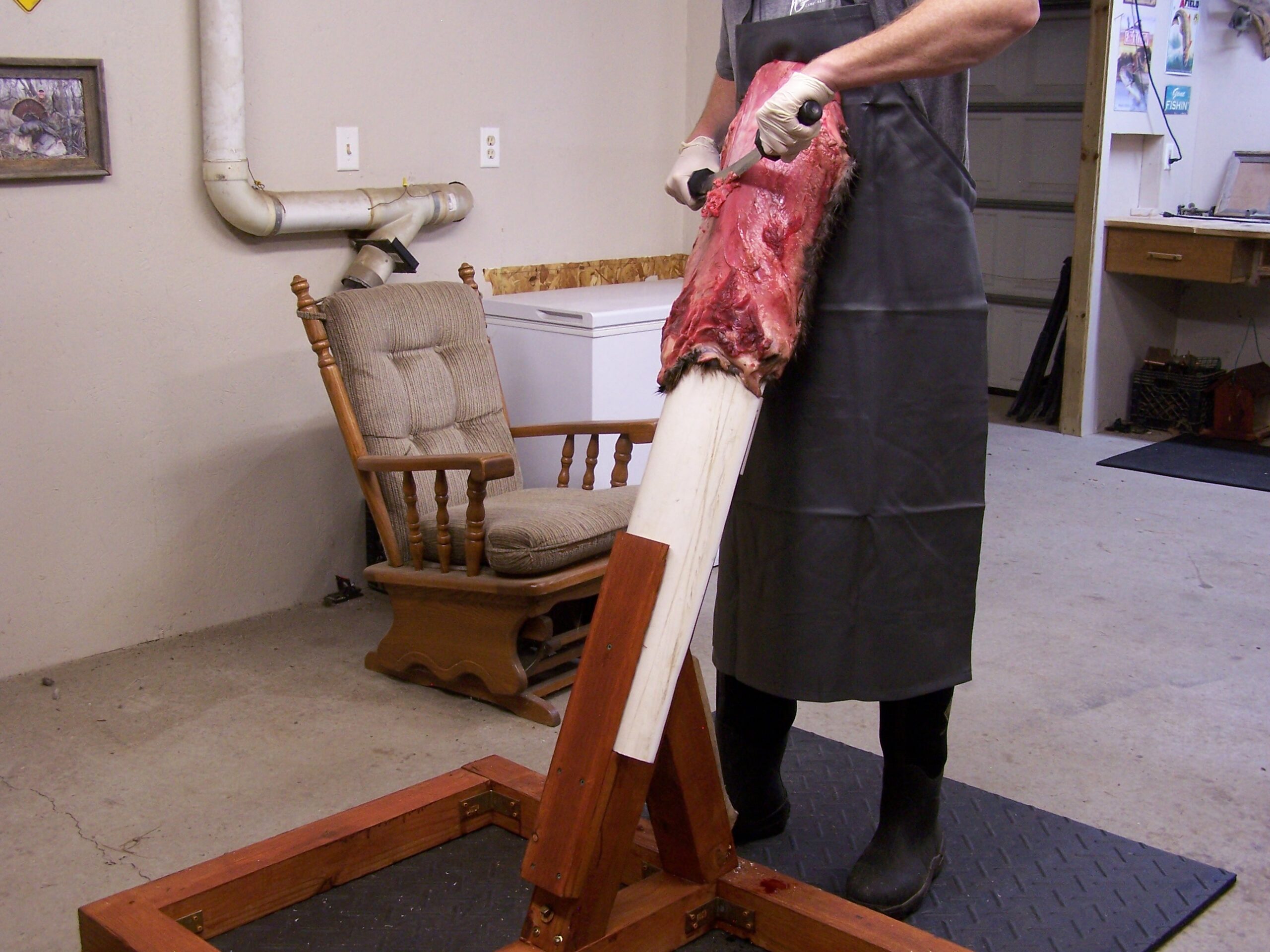
A good fleshing beam ought to be standard equipment in any fur shed.
No matter what you’re trapping, hides still need to be fleshed clean before they’re put up for market or sent off for tanning or mounting. If you’re working through a pile of fur, a good beam saves time, cuts down on frustration, and makes the whole job go smoother.
Most trappers are used to wood beams. Wood still works. But after using a PVC beam, it doesn’t take long to understand why more guys are making the switch. This version keeps the same basic purpose as a wood beam, but it’s smoother, easier to clean, and easier to build for different species.
Why use a PVC fleshing beam?
At the end of the day, wood and PVC both do the same job. They give you a hard surface to drape the hide over so you can scrape off fat, meat, and membrane with a fleshing knife.
The difference is in the way they handle.
A wood beam can work just fine, but it may have rough spots, imperfections, or a shape that does not fit every kind of fur you work on. Most wood beams also end up as a more permanent setup. They get bolted to a wall or built into a base and stay there.
PVC changes that.
A PVC beam is smooth. It cleans up easily. It can be swapped out for different sizes. And if you flesh more than one type of animal, that matters. Instead of needing a whole row of different wood beams, you can build interchangeable PVC beams and swap them as needed. When the job is done, you can pull the beam off and wash it down outside.
The first time I saw one
A few years back, a buddy of mine called and said he had a bunch of beaver to flesh in his fur shed and asked if I wanted to come help.
I had not done much fleshing before, but I figured it was time to learn. In the middle of the shed was a fleshing beam made from PVC. I had never seen one before. I was used to wood.
After working on it for a while, I got it.
The surface was slick. Cleanup looked easy. The whole setup just made sense.
Why some trappers prefer PVC
Northern Michigan trapper Bill Schlagel built a PVC beam mainly for fleshing beaver. He had set a goal of taking 100 beaver in a spring season and finished with 104. He likes PVC because the beams are interchangeable, easy to set up, and do not take up the room that several wood beams would. He also likes how simple they are to clean.
He puts plastic tubs under the beam to catch scrapings and lays cardboard under his feet to make cleanup even easier. That is the kind of thing that matters when you are doing enough fur to appreciate any time saved.
Building a PVC fleshing beam
Last winter, I decided to build one for myself.
After looking around, I found a used 20-foot section of 9-inch diameter Schedule 40 PVC on Facebook Marketplace for $40. It was heavy-duty stuff. Another trapper buddy wanted one too, so we split the cost. The seller also threw in a few smaller pieces, which ended up being useful for smaller furbearers.
Start with the animal you plan to flesh
The first beam I built was for beaver because that was what I expected to be working on in the spring.
The dimensions of your beam depend on the animal. That is one of the best things about PVC. You can build one for beaver, another for raccoon, and others for whatever else you need.
Since I could not find exact beaver beam dimensions easily, I did what most trappers do. I watched some videos, measured a buddy’s beam, and laid an XL tanned beaver hide over the pipe to see what shape looked right. That gave me a good place to start.
Make a template first
Once I had the shape figured out, I laid cardboard on the ground and made a template. After cutting it out, I taped it to the pipe and traced it.
Then I cut the beam using:
- a circular saw for the straight cuts
- a jigsaw for the curved sections
I also cut a rectangular slot in the bottom so the beam would fit onto the base. After that, I used a flap disc to smooth the sharp edges and round over the top.
Later, I built a smaller PVC beam for raccoons. Those measurements were easier to find, and a coon stretcher helps you get the shape close.
Building the base
The base matters just as much as the beam.
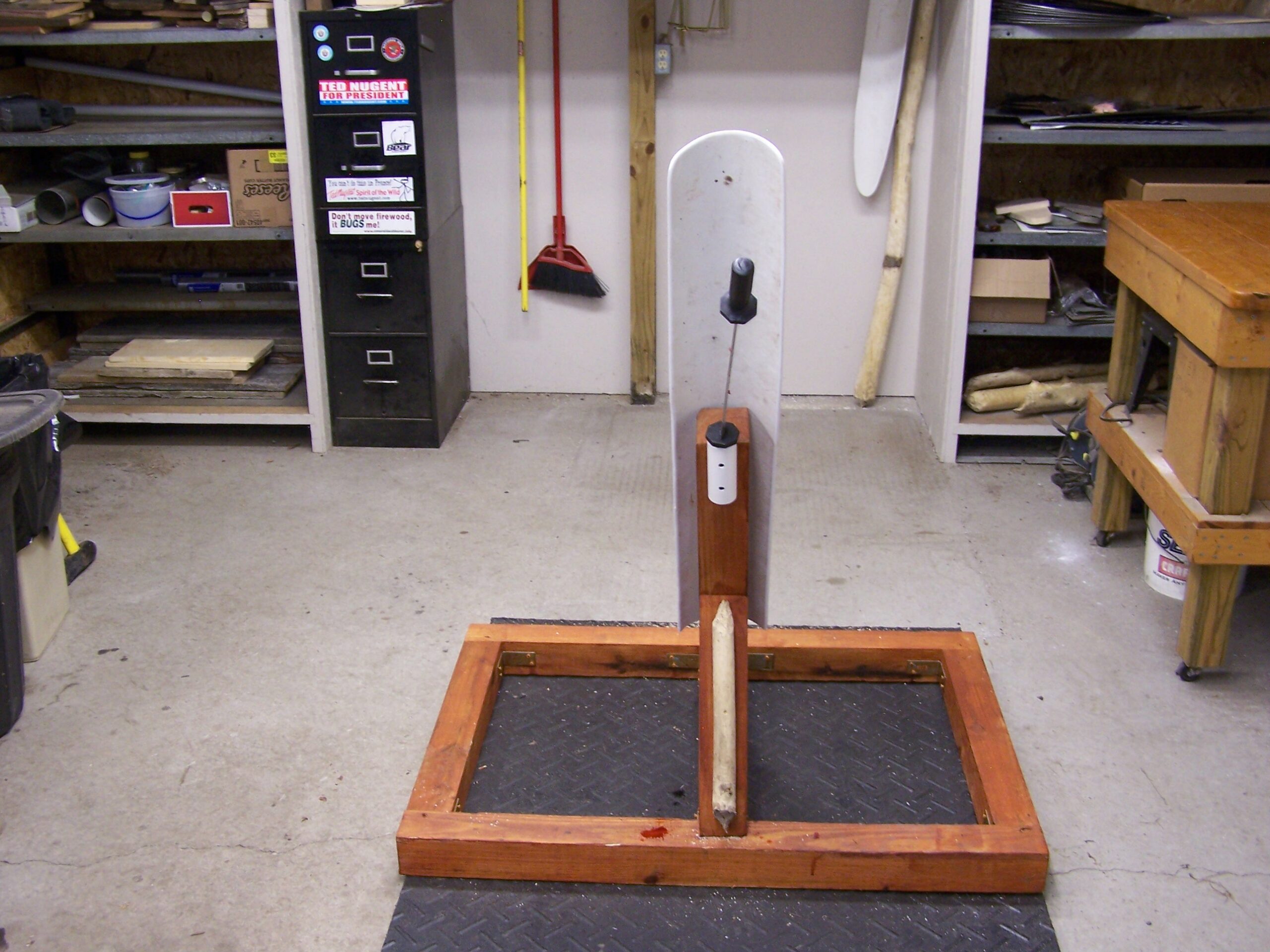
It has to hold the beam steady while you work and put the hide at a height that feels right for your body. I modeled mine after one I saw on Stu Miller’s Coon Creek Outdoors channel and built it from treated 4x4s.
The base measures 35 inches by 4 feet. That gave it enough footprint to stay stable. I also ran another 4×4 down the middle for support. Everything was put together with galvanized L-brackets and screws.
Set the angle to fit you
I used a 55-degree angle for the back support and cut the beam long enough to reach my stomach.
That part depends on how tall you are. I’m 6-foot-4, so I built mine higher to keep from bending over all day and wrecking my back and arms.
Make it interchangeable
To hold the beam in place, I built a male end from treated lumber that the PVC could slide over. That lets me swap beams out as needed.
I also added another treated board behind it for support so the beam would not rock forward while fleshing. After staining the wood, I added a short piece of 1-inch PVC pipe to hold the fleshing knife. For a little finishing touch, I screwed a beaver-chewed stick to the front of the support.
Using the beam
No matter what kind of beam you use, the goal stays the same.
You want to remove the meat, fat, and membrane cleanly so the hide does not spoil or slip. Some of that comes down to the beam, but a lot of it comes down to repetition. You learn what the hide feels like. You learn how much pressure to use. You learn what angle works best with your knife.
There is no shortcut for that.
But a good beam makes the job easier.
And when you are working through a pile of fur, easier matters.
Final thoughts
A PVC fleshing beam is not complicated, and that is part of the appeal.
It is smooth. Easy to clean. Easy to customize. Easy to swap out for different animals. And if you spend any real time in a fur shed, those things add up fast.
Wood still works. It always will.
But if you are tired of rough spots, harder cleanup, and a beam that is only good for one job, PVC is worth a look. Sometimes the best upgrades in the fur shed are the simple ones.