While I’m not a biologist, I try to pay attention to the world around me. With more and more farmsteads being occupied or built in farm country, it seems that the adaptable fox has moved in. On my neighbor’s property there is a den of fox pups each spring, and they are comfortable hanging around our yards. Though that requires me to pen up the chickens, it’s nice to see the red canines around. Coyotes, at least in my neck of the woods, don’t seem nearly as comfortable around people. The red fox has found that niche and is thriving.
Though I’ve caught a few reds here and there the past few years, last year I decided to make a concerted effort to target them. With the population up and trapping pressure nearly nonexistent, taking some out of the population would do little to diminish the numbers while also providing some beautiful pelts for hats and mittens. Even though the fur market is bearish on pelts, I’ve found great interest in hats and mittens crafted from the soft, plush hides.
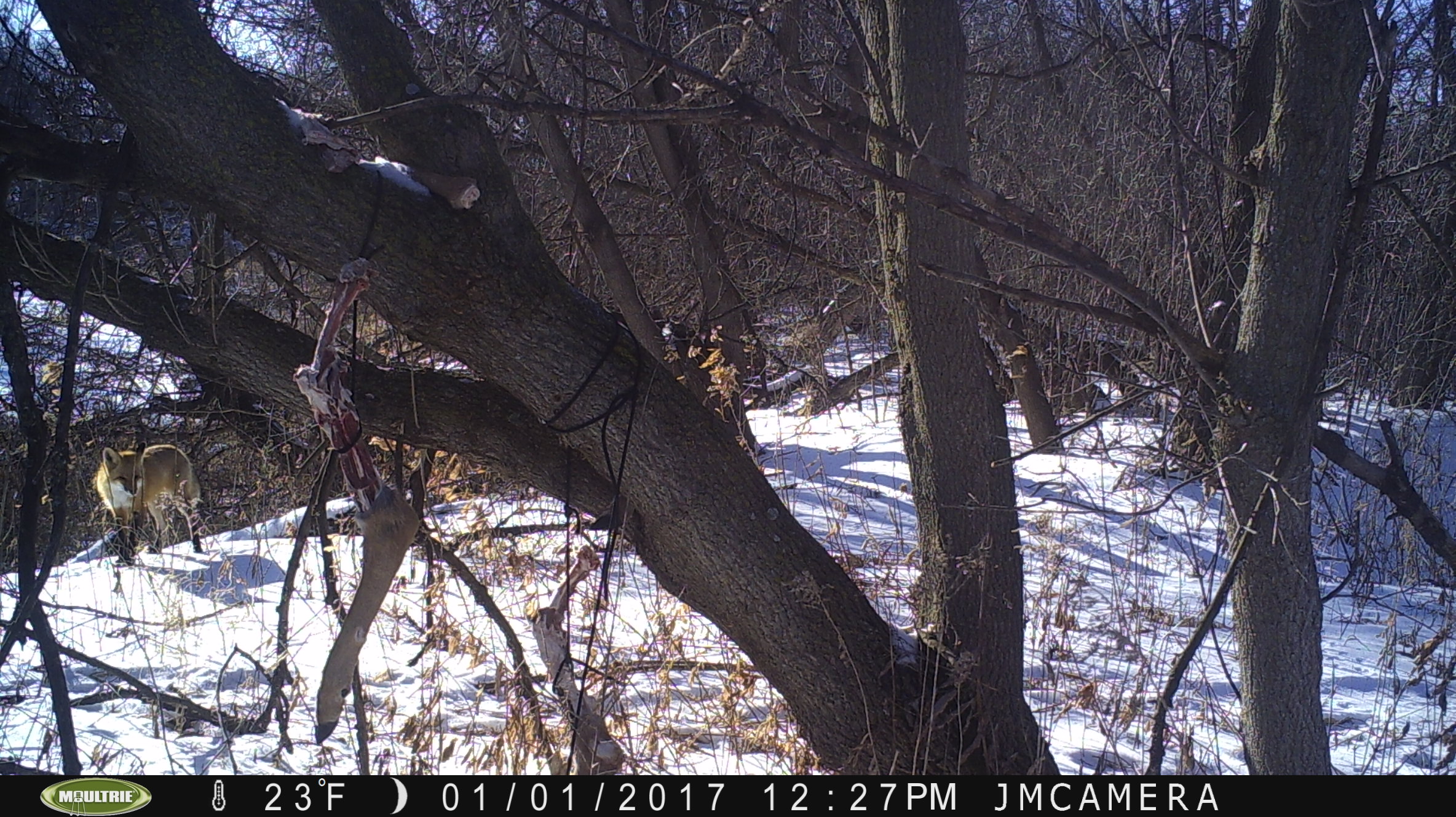
Though red foxes will move through the forest, they are high strung and alert. Snares work best here, saving the footholds for more open areas.
Waiting for Prime Fur
In areas like this, farmland red fox trapping often comes down to understanding how fox use edges differently than other predators.
In my neck of the woods, fox pelts aren’t prime until late November, so I wait until that time to put sets out. Some years a foot of snow is already on the ground, but this past year the weather was unusually nice. With the lack of snow and frost, I started out with footholds.
I have a collection of four-coiled Northwoods No. 2 traps. They are stout enough to hold a coyote but not too big for fox, skunk, or raccoon. Their compact size makes bedding a breeze.
Though I find plenty of fox tracks in the soft soil of the riparian forests, I’ve never had any success catching them in the trees. It seems that when a fox is moving through the trees and brush, it is cautious and jumpy, afraid of an ambush from a coyote.
In the edges, where the forest or tall grass meets crop fields, the fox is more relaxed. Not only does that habitat harbor large populations of prey species like mice and rabbits, it also offers good visibility. There is no better place for foothold sets than on the edge.
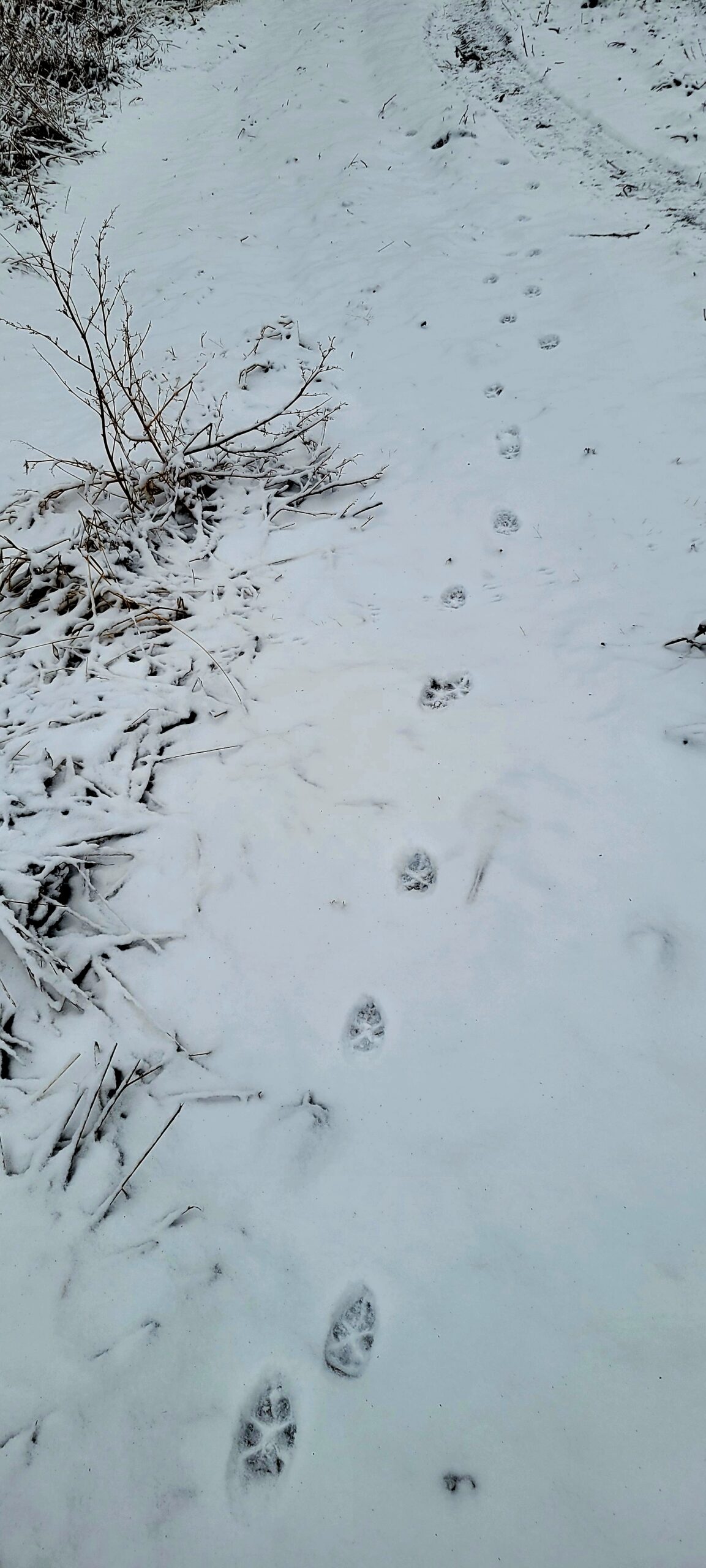
Nothing excites a trapper like a fresh pair of fox tracks.
While there are a myriad of sets that will take fox, I’m a basic trapper. The trapping pressure is so low in my area that there are probably generations of foxes that have never seen a trap. Instead of messing around with a variety of sets, I rely on a few tried-and-true sets.
The dirt hole is my go-to set. In travel corridors, usually strips of tall grass, ditches, or forest edges, I will search for tracks, especially after a rain. Finding a single track is enough sign to set on, as foxes don’t leave copious amounts of sign like a raccoon.
I try to find a slight topographical rise to dig the dirt hole into. The farmed edge of a field is generally a touch lower in topography than the brush or forest edge, and those few inches make a huge difference. Angling the hole into the higher ground creates eye-catching appeal along with backing, as the fox usually won’t climb above the hole. After bedding and sifting the trap in, I add a hunk of sheep wool, smeared with bait, into the back of the hole. A lure is dolloped above the hole to finish the set.
I’ve come to enjoy the trench set as well, as it all but guarantees a good pad catch. The trench forces the fox to step down into the waiting jaws of the trap and has become a major set on my line.
This big male was caught just before a freezing rain coated the countryside.
A Good Start on the Line
Those late November and early December days were a joy on the line. The frigid weather North Dakota is known for hadn’t hit yet, and the ground was barely frozen. I could make a set, from augering in the dirt hole to finishing up, in less than five minutes. Coyotes remained absent, but I put up some gorgeous fox pelts.
Catching the fox’s eyes in the flashlight beam on a cool morning was something that got me out of bed each day bright-eyed and bushy-tailed.
The week of Christmas the weather changed dramatically. Instead of a snowstorm, ice rained from the sky. Pulling out all the weatherproofing tricks, I used dry peat moss and waxed dirt to try to keep my sets working. I was setting a new farm, and there was a lot of sign.
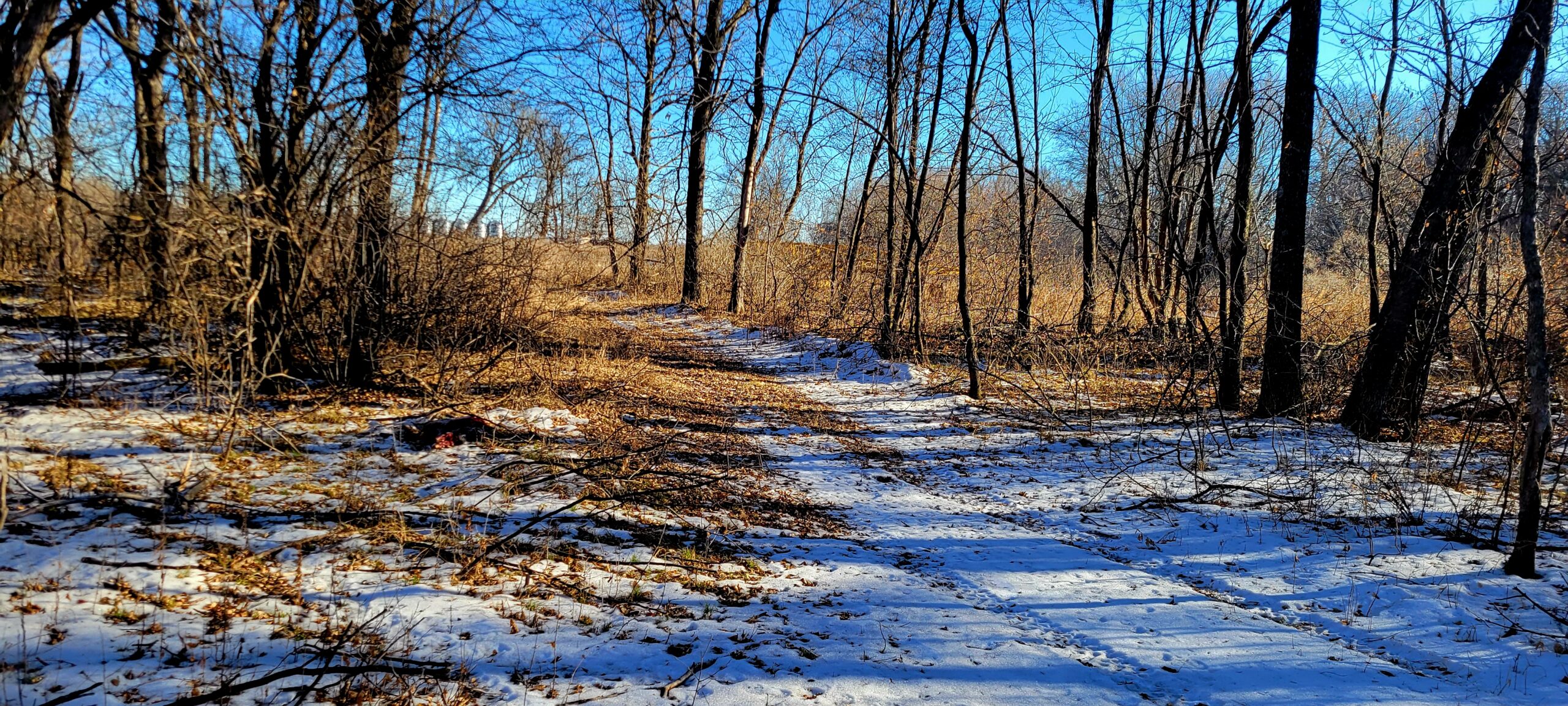
A great spot for a bait pile, open enough for birds to find it and plenty of trees for snares.
The day before Christmas was disheartening. Every set was worked, with some foxes going as far as pulling out the sheep wool and scattering it around as they ate the bait. But it took a hard whack from my axe to set off the traps. Over an inch of freezing rain had pinned them to the ground like concrete.
Finally, on the last set, I had a beauty. The big male must have been caught at the start of the storm, before the ice had a chance to do its work. Despite the setbacks, the cherry red made my day.
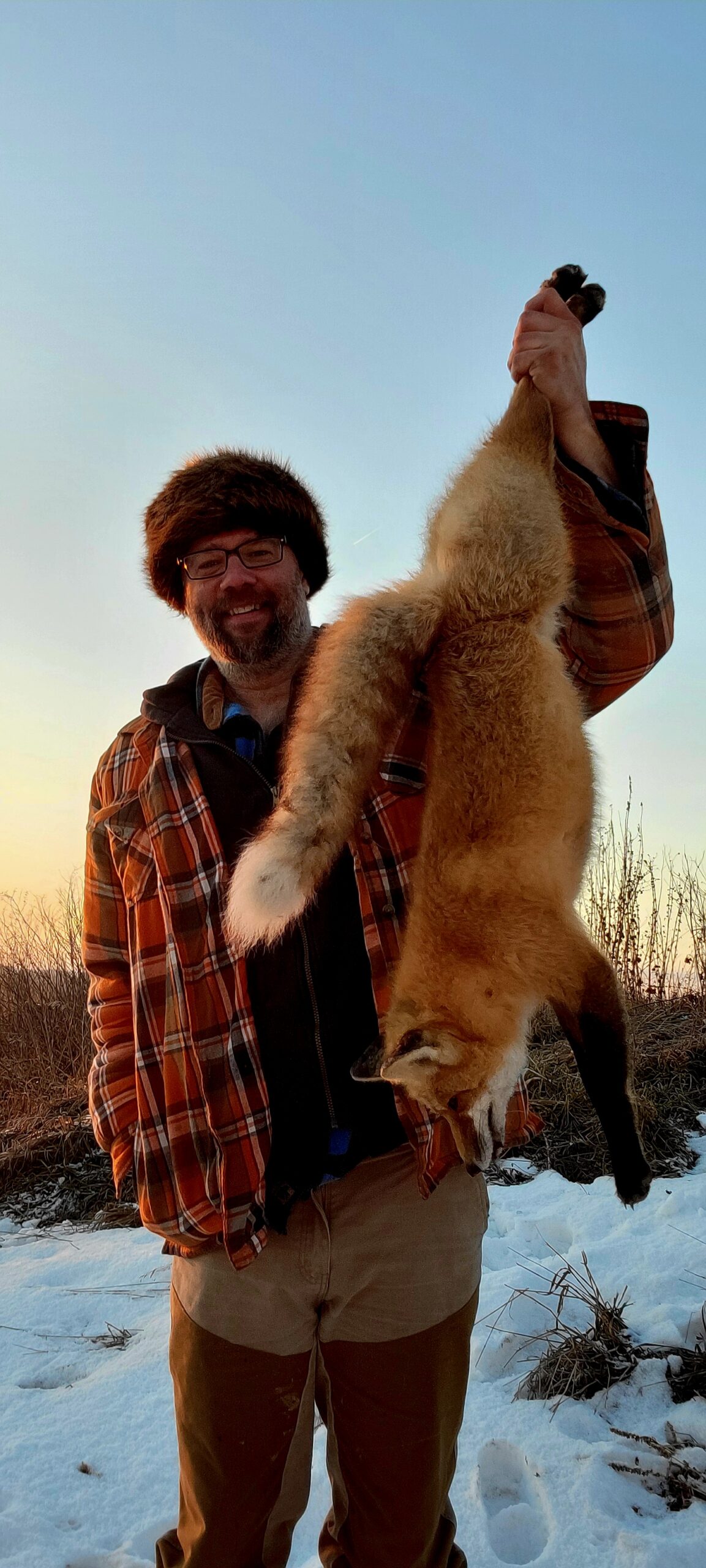
The author with a nice fox, caught after a fresh snowfall.
Using Bait in Farmland Red Fox Trapping
Using bait effectively is a major part of farmland red fox trapping once snow conditions set in.
As snow finally arrived, it was time to get some big baits out. I had saved a few deer ribcages and leg bones from deer season, as well as beaver and raccoon carcasses. Farm country is a great place to put out bait, especially once snow is on the ground. For safety reasons, always evaluate tracks to ensure there are no domestic dogs wandering from home and hitting the bones.
On two farms with the most sign, I put out bait. I’ve found that the key to getting canines on the food is making sure the birds, from crows to blue jays to woodpeckers, can find it. Both riparian forests had natural openings in the dense trees, and it was a piece of cake to make attractive piles. To top it off, I smeared some long-distance lure on nearby trees. The air was heavy with skunk as I hiked back to the pickup.
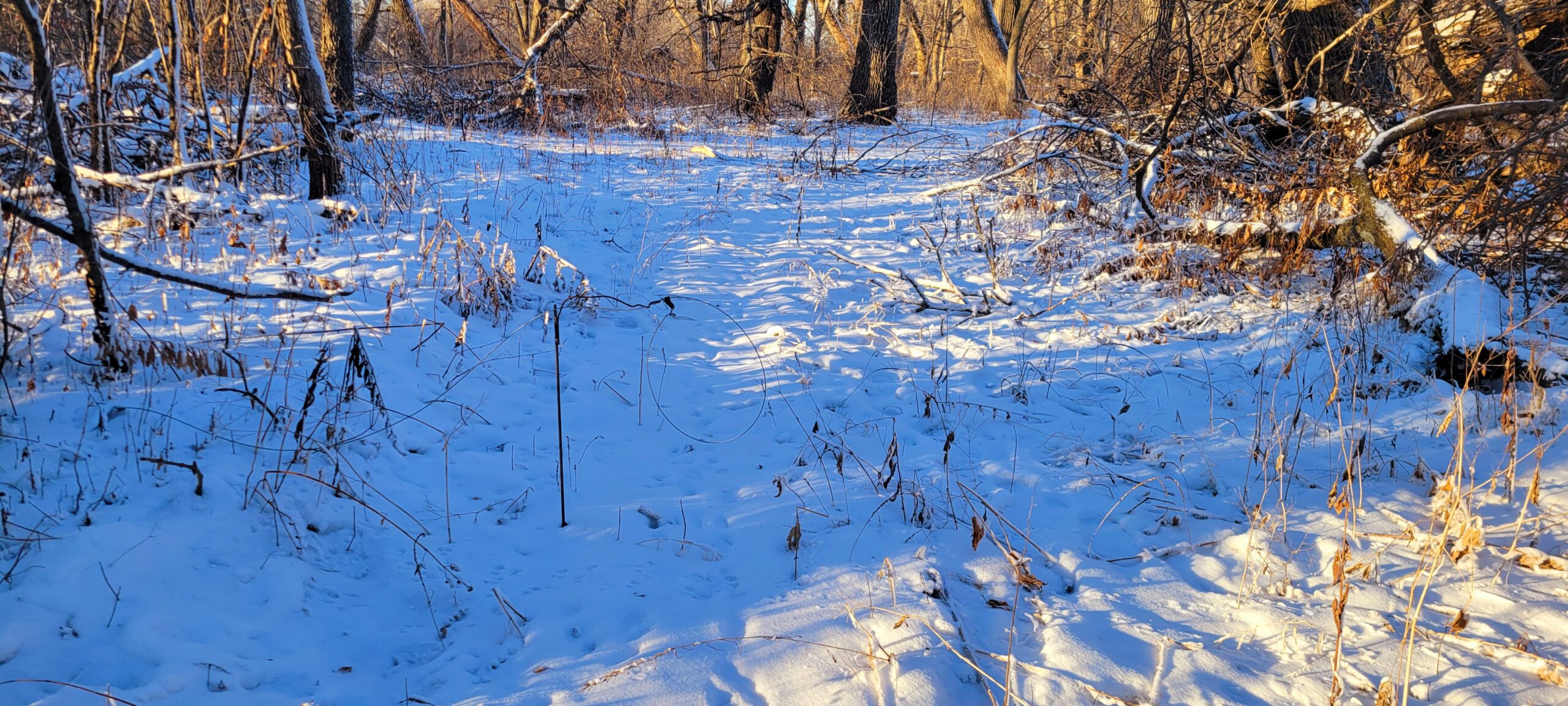
A snare, on a support, some distance from the bait. A big male was caught at this location.
The mercury dropped out of the thermometer, plunging well below zero for a week. Well before getting to the baits, I found fox tracks. Not only had they found the bait, but they had woven through the thick brush to access it. If there was ever a tailor-made setup for snaring, this was it.
As we are allowed to use lethal snares in North Dakota, I tried to find locations where a track went near a small tree. Plenty of invasive European buckthorn and native prickly ash were perfect for anchors and entanglements, and it was fun slipping along the snow and setting snares in likely locations.
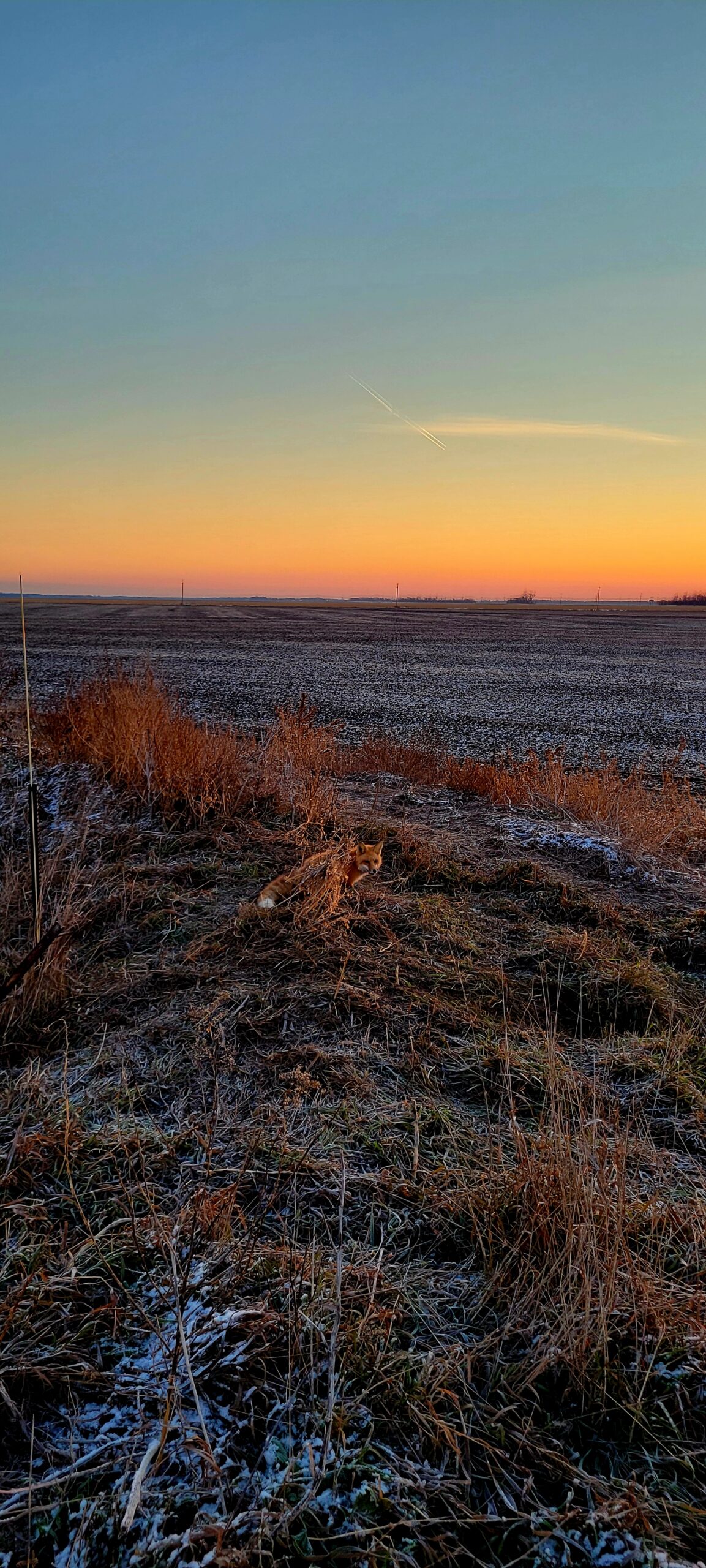
As the dawn breaks, a nice red is revealed to have been caught on a ditch crossing.
I had plenty of snare supports as well, so locations without a handy limb worked too. In one location, tracks meandered down a trail five feet wide. Though it felt foolish, I set a string of snares in the open trail. I was hoping the foxes would be moving quickly during the night and not see the steel.
Though I also set some footholds, chiseling the trap bed out of frozen ground and augering a dirt hole was time-consuming. After setting a paltry few, I decided to double down on the snares and leave the footholds in the truck.
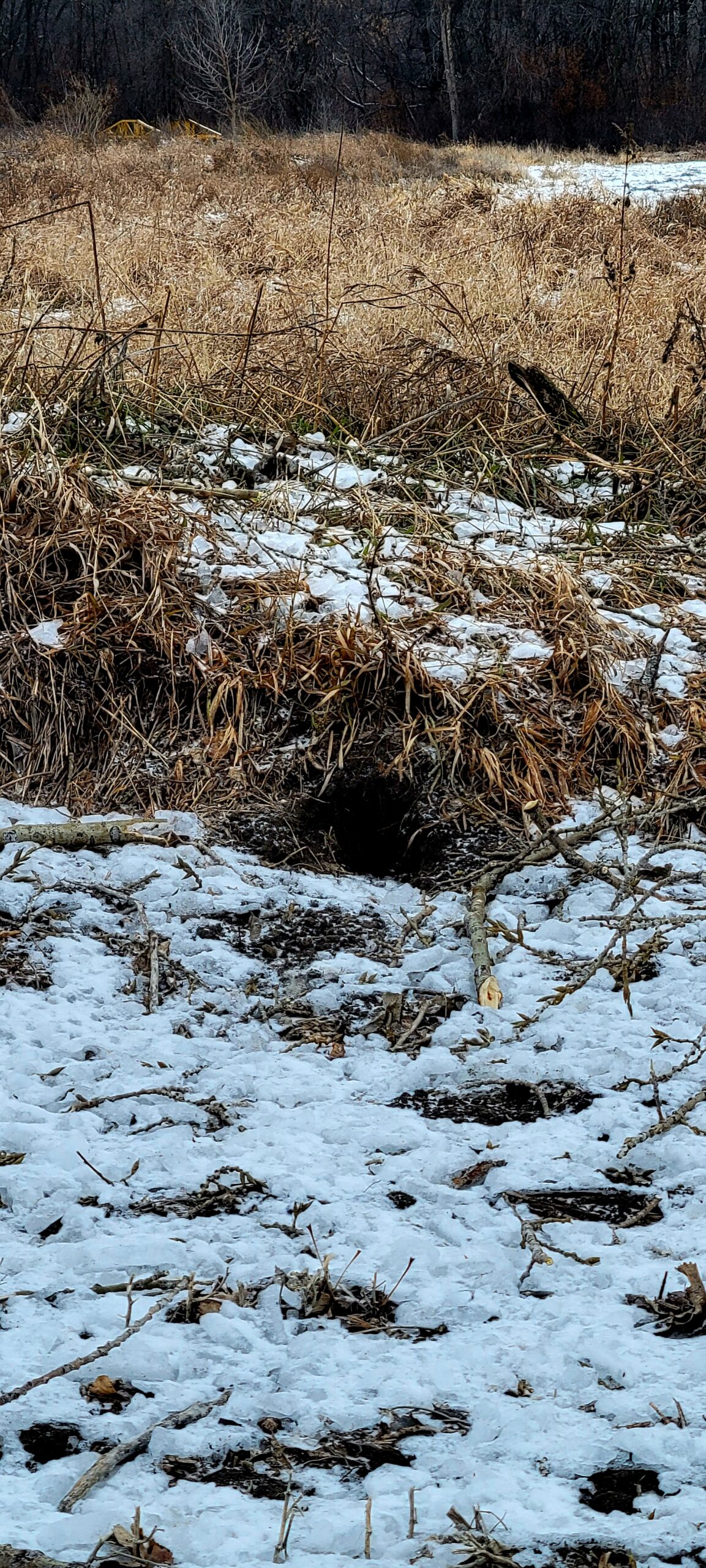
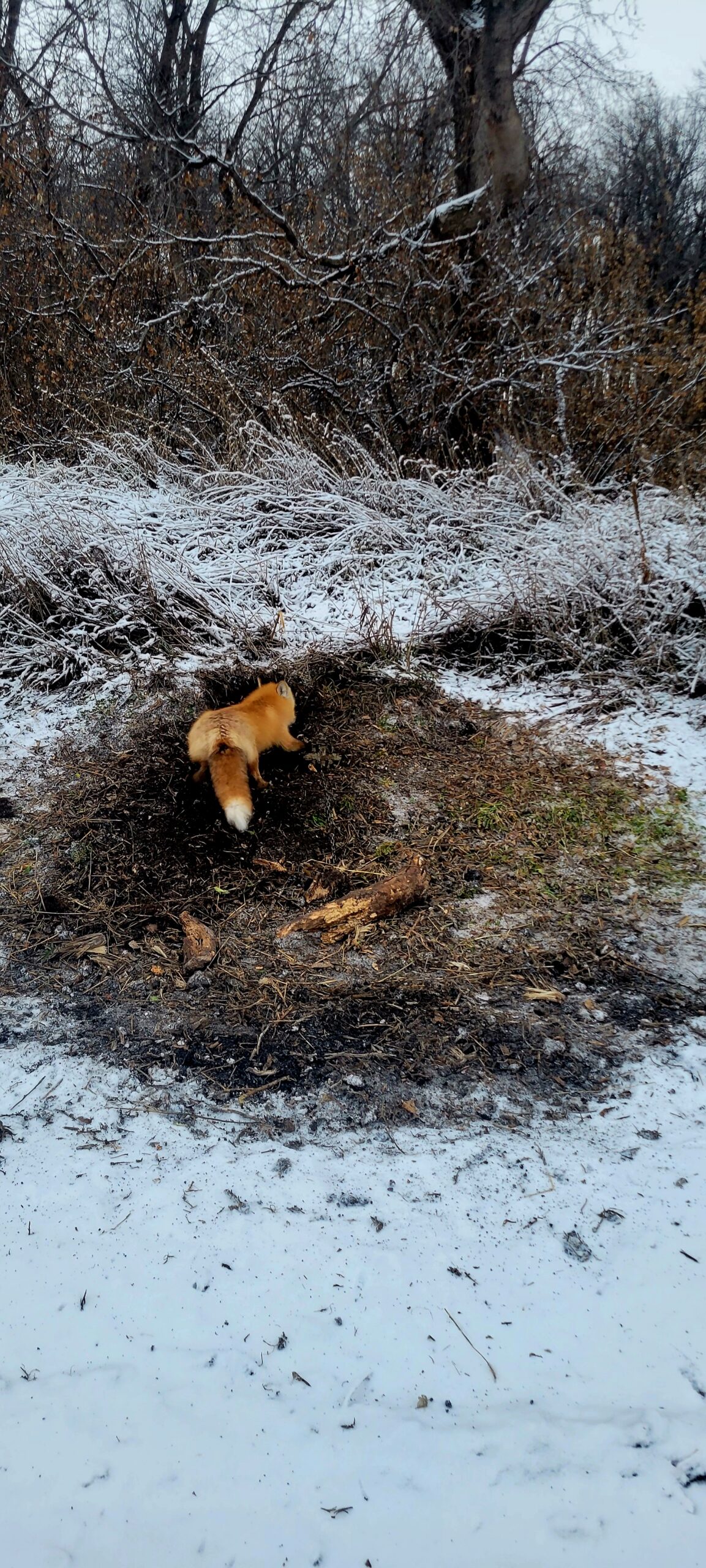
A fox dug out this dirt hole and ran off with the sheep wool. Freezing rain had frozen down the trap.
Finding a Pattern in Farmland Red Fox Trapping
For a week straight, it seemed like I had a fox nearly every morning. I even snagged a giant raccoon, a boar out looking for female company. Each fox was caught a good distance from the bait. The closer the canine gets to the bait, the more attention it pays to its surroundings.
For the first time in my trapping career, I felt like I was able to find a pattern and catch the wily red fox.
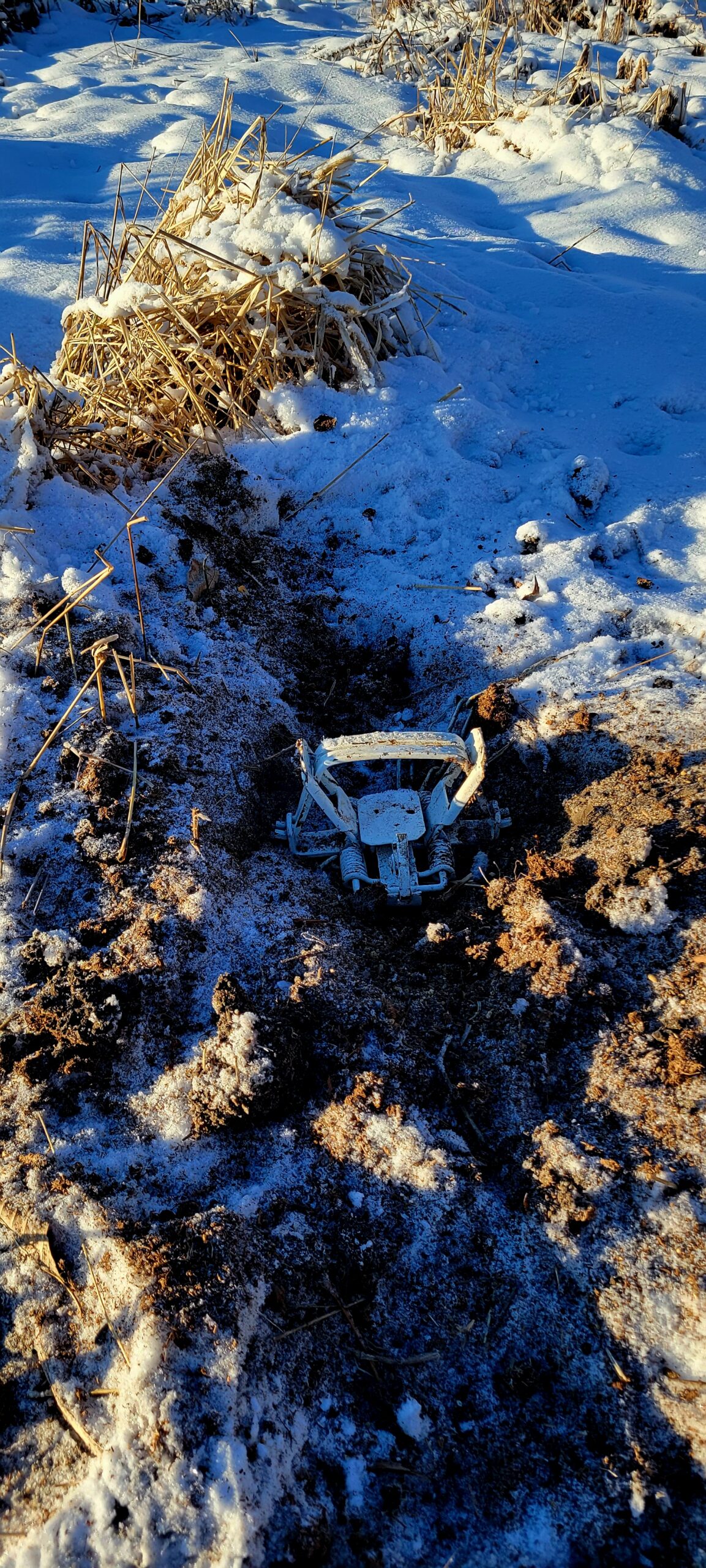
It’s a lot of work to bed footholds in the frozen ground.
On what turned out to be my last day on the line, I caught a pair of animals, one on each farm. The first, a giant male, was well furred, but the second, a younger female, was showing signs of hip rubbing. Not wanting to push it, and wanting to make sure plenty of seed was left for the next year, I collected my traps and snares.
Once all of the gear was stashed in my pickup, I couldn’t help but smile at the two reds that ended the season.
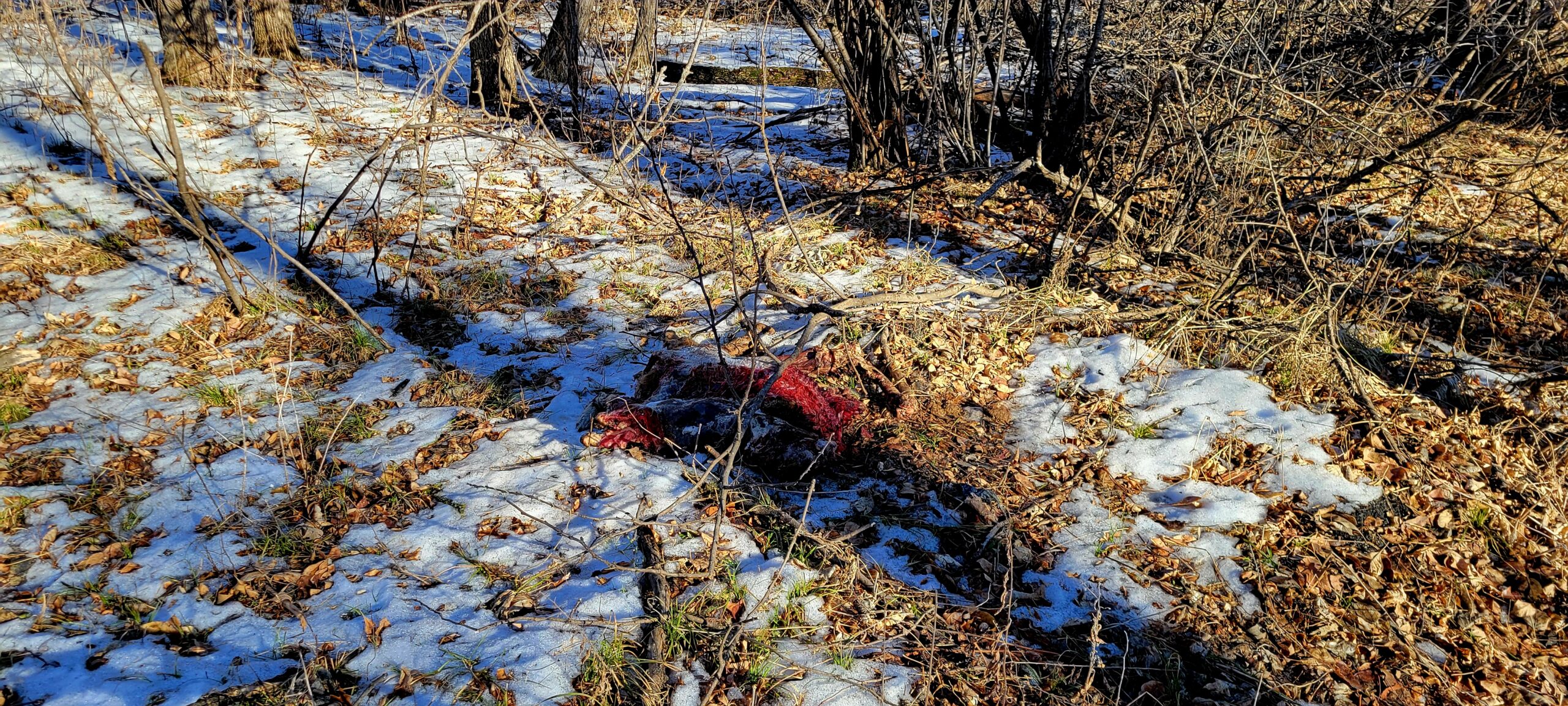
The more obvious the bait pile, the better.
Looking to take the next step? Read our guide to gray fox trapping best management practices to build on these techniques.